
Resources for the introduction of Spain Soka Gakkai’s discussion meetings
Even if you are not the Venerable Mahākāshyapa, you should all perform a dance. Even if you are not Shāriputra, you should leap up and dance. When Bodhisattva Superior Practices emerged from the earth, did he not emerge dancing?
↳ Passage from Great Evil and Great Good in WND-1, page 1110. The date and recipient of this letter are unknown. Judging from its contents, it is possible that Nichiren Daishonin sent it to a believer who was going through difficulties due to his/her faith. In this letter he encourages his disciples to consider the hostility they face as an omen of great good, and to rejoice like Mahakashyapa and Shariputra. According to The Lotus Sutra, upon hearing the teaching of universal enlightenment expounded by the Buddha and understanding that they too were Buddas, they danced with joy.

In my dialogue with Arnold J. Toynbee (1889–1975), one of the greatest historians of the 20th century, we discussed how religion could serve as the foundation for a philosophy of coexistence that could breathe fresh life into civilization and enable humankind to confront and overcome the evils that threatened its very existence.1 In particular, Dr. Toynbee saw Mahayana Buddhism as possessing great potential in this regard.
In an age of darkness and turmoil, the world desperately needs a powerful and inspiring life philosophy. It also needs capable individuals of unwavering principle and integrity, and a solidarity of conscientious ordinary citizens united by ties of deep trust. Dr. Toynbee viewed the Soka Gakkai—with its unrivaled philosophy, capable people, and solidarity—as a hope for humankind.2
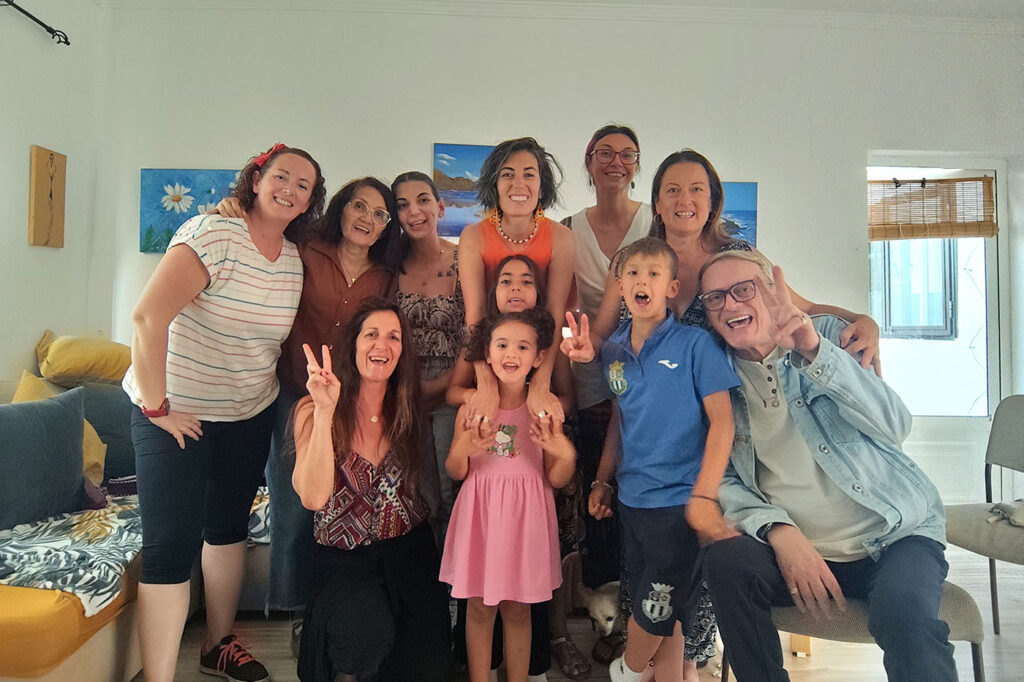
Nothing is more inspiring than the joyful dance of those who have broken through all obstacles or limitations. Nothing touches a deeper chord in people’s hearts than the songs of those who have chanted earnestly daimoku.3
[The important thing is not living without difficulties,] it is how we react when something bad occurs that is important. If we make up our minds to enact a wonderful drama, summon forth the heart of a lion king, and take bold action, we can transform great evil into great good.4
Nothing is more inspiring than the joyful dance of those who have broken through all obstacles or limitations.
Indeed, the elated life state that this section refers to does not manifest necessarily or always through dances. Having said so, in the Soka movement, dance, music and other artistic expressions are seen with supreme respect and they hold a special place as excellent expressions of the human spirit.
Daisaku Ikeda was always convinced of the fact that art and culture have the power to transcend differences, bring people together and unite hearts, no matter what nationality or ethnic group one is from. In The New Human Revolution we can read the following passage:
Great art is an expression, a manifestation, of humanity. As such, it is imbued with freedom and diversity. It is the exact opposite of the kind of barbarism that seeks to suppress and control people by military force, violence or other external pressures. This is why art can transcend the constraints and restrictions of politics and, on a more profound level, help cement ties of friendship, empathy and mutual understanding. It is here that I sense art’s great potential to contribute to world peace.5
From all the examples we could mention, an indication of this is that amongst the first institutions that Ikeda Sensei founded, we find the Min-On Concert Association (1963), which more than six decades later keeps promoting music culture exchanges to promote understanding and respect amongst nations and people around the world.
Mailbox: prensa@ediciones-civilizacionglobal.com
- See TOYNBEE, Arnold J. y Daisaku IKEDA: Choose Life, quoted in IKEDA, Daisaku: «A Youthful Dynamically Developing Organization», Seikyo Shimbun, 1/1/2011. ↩︎
- IKEDA, op. cit. ↩︎
- IKEDA, Daisaku: «The Pure Spirit of Youth Gives Hope to Society», Seikyo Shimbun, 14/7/2014. ↩︎
- IKEDA, Daisaku: «The Journey of Mentor and Disciple for Worldwide Kosen-rufu», Daibyakurenge, October 2020. ↩︎
- IKEDA, Daisaku: The New Human Revolution, volume 5, SGI-USA, 1st edition, chapter «Trailblazing», page 34. ↩︎